 |
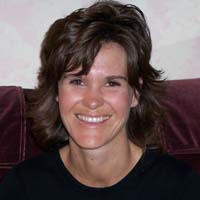
They are mothers, fathers, grandmothers, grandfathers, daughters, sons, aunts, uncles, neighbors and friends. They do all those things in the course of their workday. They are the people parents depend upon 180 days of every year. They are some of our teachers.
Three teachers from Berkshire County, along with a retired teacher and one woman about to become a teacher, recently divulged the reasons they chose the teaching profession and how they feel about teaching. Their answers were as varied as their ages, perspectives and backgrounds, yet undeniably similar to the way all dedicated professionals feel about their careers in any field.
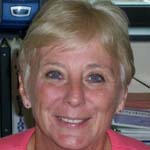 |
Mabel Hiltpold is a mother, grandmother and great grandmother. She lives in Lenox and she retired from 25 years of teaching in 1974. She said there were not many career choices for women in the early ’50s.
"The schools didn’t want to hire married women, so we were paid less than the single women and the men who did the same job," she said.
Hiltpold was among the first of a group of women in Pittsfield who became certified as teachers in 1954. Up until that time, they were classified as "intermittent substitutes," earning $11 per day. Becoming a permanent substitute bumped earnings to $14 a day.
Hiltpold taught fifth and sixth grade at Plunkett School.
"Dishwashers made more money than some teachers in my day," she said. However, she added, "Teaching is one of the most rewarding jobs you can have — when a student ‘gets it’ you feel like a hundred bucks."
Jacqueline McLaughlin of Dalton said she went back to teaching "1 on 24" last year after tutoring "1 on 1" for nine years. She has two children and teaches algebra and geometry to freshman and sophomores at Wahconah Regional High School.
Both of McLaughlin’s parents were teachers. Her father, James Duquette, who died two years ago, taught English for 30 years, and her mother, Mary Jane Duquette, taught math.
McLaughlin, who is the middle child of four brothers, has been a teacher since she was old enough to hold a piece of chalk.
"I was always the teacher when we played school," she said.
Teaching her brother Pat, 16 months her junior, how to write stories, add and subtract was the beginning of her career as a teacher. Education was important in her family, she said.
"It was never really a decision. I think I always knew I was going to be a teacher."
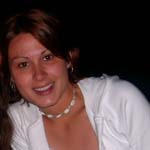
James Beauchesne, 21, also of Dalton, is pursuing her degree in education and has passed the first of three tests to be a certified as a teacher in Massachusetts.
 |
"I chose to become a teacher because I want to make a positive impact in children’s lives, teaching them, with different techniques, to strengthen their interests and abilities," she said.
As part of her educational and certification requirements, Beauchesne has already put in classroom time, as an observer and a participant in the teaching process.
"My first teaching experience occurred in the spring of 2004 at Pittaway Elementary School in Ashland," she said. "I was a student observer of a kindergarten class for my Field 1 education requirement. I would help students with their work and I was in charge of the activity table. At this table, we used glue a lot and Sam (a student) thought it would be funny to put glue on my seat. So that was quite a sticky situation. The hardest part was trying to explain to a 5-year-old old his joke wasn't funny."
Debbie Bevan of Dalton, has been a teacher for 23 years. She has taught every grade from kindergarten through graduate school, with the exception of third and fourth grade, at the Central Berkshire Regional School District, Massachusetts College of Liberal Arts, Cambridge College, Fitchburg State College and Hampshire Educational Collaborative.
"I always wanted to be a teacher but got waylaid with family first,” she said. “After earning an associate’s degree in elementary ed, I had two daughters, (one is currently a teacher and the other is a certified school adjustment counselor) and then returned to North Adams State College and completed my degree."
"I love teaching,” she added. “Whether it is a student at the middle school or a student taking a graduate course, I find that I learn by teaching. It always keeps me on my toes; what should I do next?"
Maryann Sherman, of Pittsfield, has a bachelor’s degree in education from the College of St. Rose and a master’s in education from North Adams State. She has been a teacher for 32 years and is now teaching second grade for the sixth year at Stearns School in Pittsfield. She has taught first grade and kindergarten at Sacred Heart, Notre Dame and Mark Middle School. When she wasn’t teaching full-time, she was tutoring part-time.
"I have always loved working and playing with children. I started as a park director in Pittsfield for three summers. I enjoy watching children learn through discovery and exploration,” she said.
All five agreed that knowing you have made a difference in a child‚’ life is one of the most rewarding things about teaching.
Bevan said, "I have heard from students and parents that I have made a difference, but I am not sure I knew it when it was happening."
Sherman recounted a conversation she had with a former student:
"I encouraged a little girl to be the main singer in one of our little musicals several years ago. I told her she should take singing lessons when she was older. I heard recently from one of her teen friends that she is finally pursuing this, and that this is the most positive move she has made in her life for a long time."
Hiltpold, who taught students who are now judges and lawyers, said, "I’d like to think I’ve made a difference in all my students’ lives. Conceited, aren’t I?"
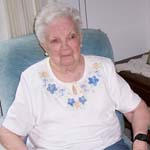 |
McLaughlin said that although it was strange to go to colleague-to-colleague relationships as a teacher at Wahconah, where she was once a student, she could not imagine what she would have done without mentors like her former 10th-grade math teacher, Mary Shipp.
"I find it sad that kids who work as cashiers can’t add and subtract without the register display, but I am encouraged by connections with students who have been struggling when you see they understand the whole process that leads to the answer, after you have tried different methods to help them understand. There’s no feeling like it."
Beauchesne, with only a few teaching experiences, said she worked with a 5-year-old kindergarten student who had learning disabilities and would get frustrated when he could not understand the lesson.
"I worked with Mike and was able to help him slow down his reading and think about each sentence after it was read,” she said. “He was able to improve his writing by looking at example sentences and use the forms of punctuation as clues. I felt I had a positive impact on his learning abilities and also his confidence in helping other students with their work."
Teaching is hard, sometimes heartbreaking work, and teachers often feel under-appreciated and misunderstood because they "only work 180 days a year."
"People think you leave the job at 2:30 or 3, and that you don’t bring the work home with you." McLaughlin said. "What they don’t understand is, though you may not be in the classroom, you are always working — correcting papers, planning and preparing lesson plans, worrying about your students, taking continuing education courses and addressing the concerns of students, parents and the ‘powers that be’ by listening and learning yourself."
Beauchesne said, "The biggest misconception is that teaching is easy! Many people assume that being a teacher is laziness, but it is one of the hardest professions. It takes infinite patience and confidence."
"People don’t think we work hard enough,” Sherman said. “They don’t realize how many decisions are made during the school day and after, when plans are made, strategies are formed and instruction is finally implemented to meet the needs of each child."
The passion these five women have for teaching is apparent. They offered advice to others pursuing a career in teaching, based on their own experiences.
"Be flexible, be compassionate and remember that all children want to please, even the ones that may drive you crazy," Bevan said. "Don’t be afraid to change. In all cases, ask if what you are doing would be good enough if you were teaching your sibling, child, or grandchild. Always keep your expectations high."
Hiltpold said, "Forget all the nonsense and teach the subjects."
"Learn from your students," McLaughlin said. "Be understanding because the best laid plans won’t always work out the way you expect — and always be willing to listen because sometimes that’s all you need to do."
Sherman said her advice could serve teachers and parents alike: "Think like a child; appreciate little things. Eat well, exercise and stay healthy. You need all the energy you can get. Remember teaching is an art and a science. Keep an open mind and be creative. Teaching is never boring. Balance your school life with family and friends. Enjoy it.
 |
And always have a good pair of shoes."


 Posts
Posts


No comments:
Post a Comment